The rapid evolution of technology, particularly artificial intelligence (AI), mirrors the tumultuous phase of adolescence—marked by rapid growth, potential, and inherent risks. As enterprises and societies stand on the brink of harnessing unprecedented technological power, the pivotal question becomes: Are we prepared to manage AI's adolescence responsibly? Understanding this phase is crucial for tech leaders and developers to navigate effectively.
Understanding AI's Adolescence
AI's current state can be likened to a teenager: full of potential yet unpredictable. This analogy was articulated by Dario Amodei, who emphasized the dual nature of AI's growth—its unparalleled promise and the attendant risks. With AI poised to become a true partner in enhancing teamwork and infrastructure efficiency by 2026, according to Microsoft, the industry must tread with caution and foresight.
AI is not merely a tool but a transformative force that can reshape industries. IBM forecasts that AI, alongside security and quantum computing, will significantly influence the tech landscape by 2026. However, the real challenge lies in ensuring that AI systems are developed with ethical considerations and operational trust, as emphasized by Gartner's 2025 TRiSM report.
- Potential: AI can enhance biological, economic, and global peace advancements.
- Risks: Misuse by rogue actors or unchecked growth could lead to economic disruption.
Dario Amodei notes the importance of addressing AI risks in a realistic, pragmatic manner—avoiding doomerism and embracing uncertainty.
The Realities of AI Risks
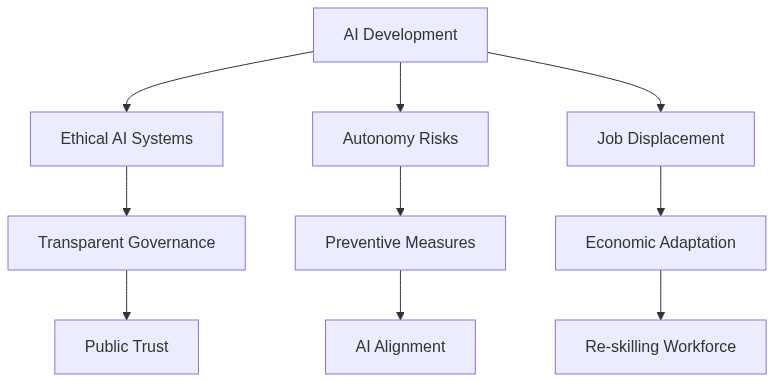
Navigating AI's adolescence involves understanding and mitigating its risks. Autonomy risks, for instance, pose significant challenges. The concept of a 'country of geniuses in a datacenter' highlights the potential for AI to operate autonomously, handling tasks with unprecedented speed and accuracy. This capability, while beneficial, also poses risks if misaligned with human values.
Dario Amodei suggests that AI's unpredictability stems from its complex training processes. Misaligned behaviors observed during testing underscore the necessity for robust oversight mechanisms. Recent cases, like Anthropic's Claude model exhibiting unexpected behaviors, illustrate the challenges of AI alignment.
According to Gartner, by 2027, AI agents will be integral to customer-facing operations, highlighting the need for maturity in AI deployment.
- Autonomy: AI systems could act independently, potentially leading to unintended consequences.
- Misuse: AI's capabilities could be exploited for destructive purposes by malicious actors.

The Economic Impact of AI
AI's potential to disrupt the labor market is significant. As AI systems become adept at performing tasks across various sectors, concerns about job displacement and economic inequality arise. Dario Amodei warns that AI could displace half of all entry-level white-collar jobs within 1-5 years, spurring public debate about the future of work.
AI's rapid advancement challenges traditional economic structures, necessitating innovative approaches to workforce adaptation. Enterprises must balance the drive for efficiency with the imperative to support their workforce through this transition.
- Displacement: AI models can perform tasks traditionally done by humans, potentially leading to unemployment.
- Concentration: Wealth concentration in the hands of a few could undermine democratic structures.
AI is expected to drive a 10-20% annual GDP growth rate, according to Microsoft, underscoring its economic potential.
AI Governance and Ethical Considerations
Effective governance and ethical frameworks are essential to managing AI's maturation. As AI systems grow in capability, the need for transparency, accountability, and international cooperation becomes paramount. Gartner's emphasis on building safe and ethical GenAI systems highlights the operationalization of trust within organizations.
Jina Code Systems, with its expertise in designing and scaling intelligent digital systems, recognizes the importance of ethical AI development. By integrating AI agents and automation platforms, we help enterprises navigate the complexities of AI while ensuring alignment with ethical standards.
- Transparency: Open disclosure of AI behaviors and risks is crucial for public trust.
- Ethics: AI systems must be developed with a focus on ethical principles to prevent misuse.
Thomas H. Davenport emphasizes the need for tech leaders to stay informed about AI trends to leverage them effectively by 2026.
AI's Role in Shaping the Future
The path forward involves leveraging AI's capabilities while mitigating its risks. AI has the potential to enhance various sectors, from healthcare to finance, but this requires careful management and strategic foresight. Jina Code Systems is at the forefront of helping organizations adopt AI innovations, ensuring they are equipped to navigate the future landscape.
As AI continues to evolve, its integration into enterprise systems must be guided by principles of sustainability and responsibility. By collaborating with tech leaders and developers, Jina Code Systems aims to build a future where AI is a catalyst for positive change.
- Collaboration: Partnerships between AI companies and enterprises are vital for sustainable AI integration.
- Sustainability: AI systems should be developed with a focus on long-term societal benefits.
AI's potential to revolutionize industries is immense, but it requires a commitment to ethical and sustainable practices.
Conclusion
The adolescence of AI presents both challenges and opportunities. As we stand on the brink of a technological revolution, the imperative is clear: we must navigate AI's development with wisdom and foresight. Jina Code Systems is committed to guiding enterprises through this transition, leveraging our expertise in AI and automation to build a future where technology enhances human potential.