The debate over AI and job displacement has become a fixture in boardrooms and policy circles alike. Yet, beneath the headlines warning of mass automation, recent evidence reveals a more nuanced—and actionable—reality. While large language models (LLMs) have unlocked new avenues for automation and augmentation, their actual impact on the labor market diverges sharply from theoretical predictions. Understanding this gap isn’t just an academic exercise—it's essential for tech leaders and developers charting the future of digital transformation. At Jina Code Systems, we believe that seeing past the hype is the first step toward building resilient, adaptive organizations.
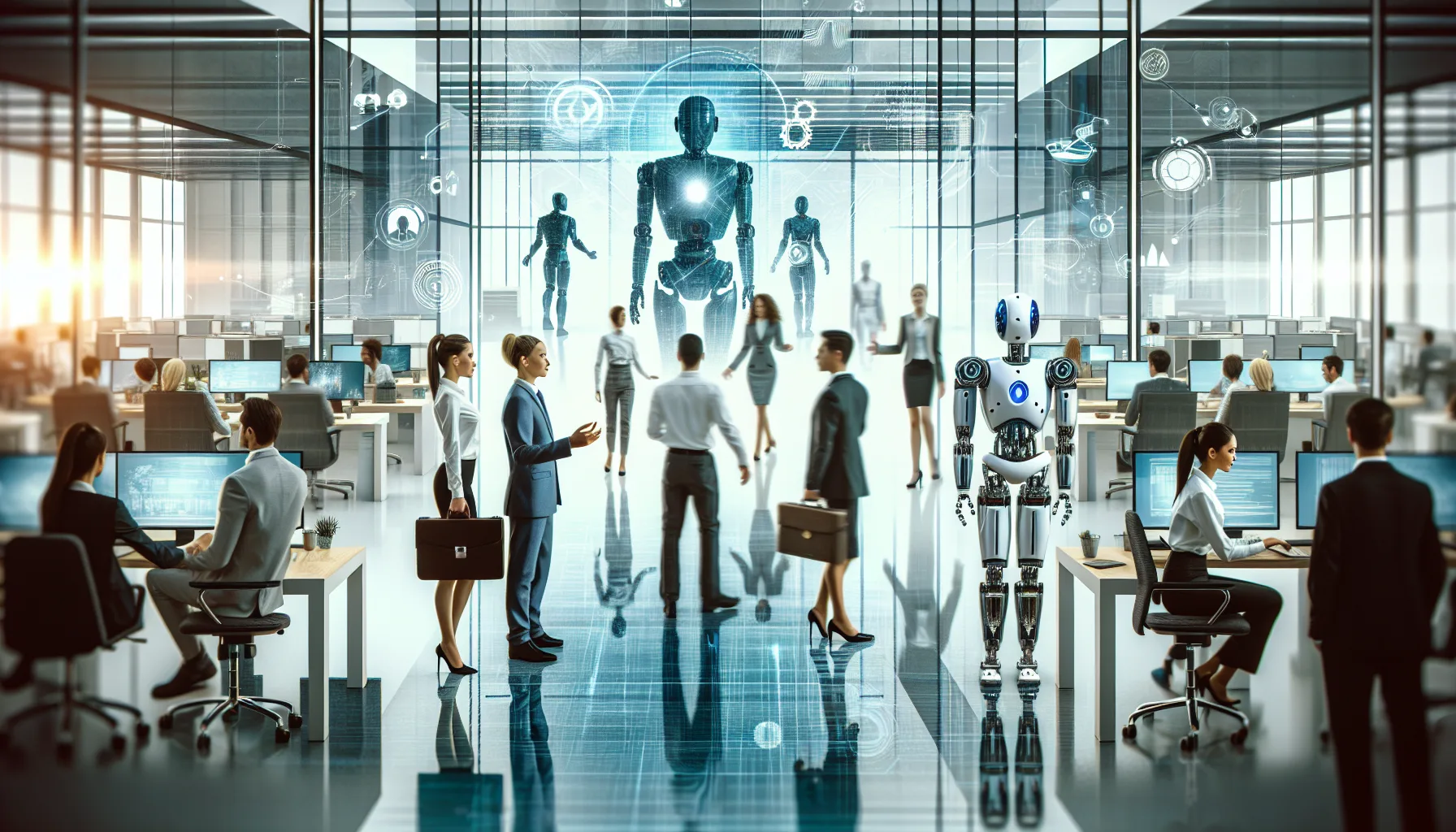
From Hype to Measurement: The Elusive Reality of AI Job Displacement
For decades, forecasts of technological disruption have oscillated between dire warnings and cautious optimism. The case of AI is no different, but what sets this era apart is the availability of granular, real-world data on where and how AI is actually being deployed. The latest research by Anthropic introduces the concept of "observed exposure": a measure that marries theoretical LLM capabilities with real usage patterns in work-related automation.
This approach stands in sharp contrast to earlier, more speculative measures. For instance, previous studies on job offshorability projected that up to 25% of U.S. jobs were vulnerable to being moved overseas, yet most of those roles continued to grow robustly over the subsequent decade (Ozimek, 2019). Similarly, government employment forecasts often add little predictive value beyond simple trend extrapolation (Massenkoff, 2025).
The challenge with AI, as the Anthropic study notes, is that its effects are rarely dramatic or immediate. Unlike the COVID-19 pandemic, whose economic shockwaves were unmistakable, AI’s impact is often subtle, filtered through layers of business process, regulation, and human oversight.
Observed Exposure: The New Barometer for AI’s Workforce Impact
If AI’s potential is vast, its practical reach is still catching up. Anthropic’s framework uses three data pillars: detailed task breakdowns from O*NET, real-world usage captured in the Anthropic Economic Index, and task-level speedup estimates from Eloundou et al. (2023). This yields a spectrum: from tasks theoretically automatable by AI, to those actually automated in production environments.
- Only 33% of Computer & Math tasks are currently automated by LLMs, even though 94% are theoretically feasible (Anthropic, 2026).
- Some roles, like Computer Programmers, see up to 75% task coverage by AI—yet for nearly 30% of workers (like cooks or lifeguards), exposure is effectively zero.
This gap between potential and observed use is driven by a mix of technical, organizational, and regulatory factors. For example, while LLMs could theoretically automate prescription authorizations, practical deployment is hampered by compliance risks and integration hurdles. As a result, AI's labor impact is tightly coupled to adoption rates and workflow integration—not just raw capability.
For technology leaders, this means that risk assessments based solely on what AI could do will almost always overstate the near-term threat. Real disruption depends on the intersection of technical feasibility and business reality.

Who’s Actually at Risk? Surprising Demographics of AI Exposure
As observed exposure rises, so does interest in which groups are most affected. Anthropic's data reveals an unexpected demographic twist: the most exposed workers are more likely to be older, female, higher-paid, and better educated. Specifically, graduate degree holders make up only 4.5% of unexposed roles, but 17.4% of those in the highest exposure quartile.
Income patterns echo this divide. The most AI-exposed occupations earn 47% more on average than those in low-exposure fields (Anthropic, 2026). This flips the conventional wisdom that automation threatens primarily low-wage, routine jobs. Instead, AI is—at least for now—penetrating knowledge work at the higher end of the pay scale.
Still, job growth projections from the U.S. Bureau of Labor Statistics (BLS) suggest a slow burn rather than a cliff: for every 10% increase in observed exposure, projected growth in that occupation drops by just 0.6 percentage points. This weak correlation highlights the importance of nuanced, data-driven planning over blanket assumptions.
No Unemployment Spike—But Young Workers Face a Hidden Squeeze
If AI is displacing jobs, it should show up in unemployment data. Yet, analysis using the U.S. Current Population Survey paints a muted picture: there has been no significant increase in unemployment among highly AI-exposed workers since late 2022. This finding is echoed in recent Yale research and corroborated by multiple independent studies (EIG, 2025).
The average change in the unemployment gap since the release of ChatGPT is small and insignificant, suggesting that the unemployment rate of the more exposed group has increased slightly but the effect is indistinguishable from zero. — Anthropic, 2026
However, the story shifts when looking at early-career workers. Researchers such as Brynjolfsson et al. (2025) have documented a 6–16% drop in employment for 22–25-year-olds in exposed occupations, attributed mainly to slower hiring rather than layoffs. Anthropic’s updated analysis supports this: since 2024, young workers are 14% less likely to be hired into high-exposure jobs, even as unemployment rates remain flat. This suggests a transition where career entry points in certain fields are narrowing, even as existing roles remain stable.

Implications for Enterprise Strategy: Automation as Augmentation, Not Replacement
The practical upshot for businesses and developers is clear: AI’s labor market impact is not a one-way ticket to job loss. Instead, automation is unfolding as a form of task-level augmentation, with LLMs handling repetitive or highly structured work while leaving complex judgment and interpersonal functions to humans.
- For example, customer service representatives increasingly rely on AI-powered chatbots to handle common queries, but escalation and relationship management still demand human oversight.
- In software development, code generation tools can automate boilerplate or testing, yet architecture and problem-solving remain human-led.
Organizations that treat AI as a tool for continuous process improvement—rather than a blunt replacement—are best positioned to capture value. According to a 2025 Gartner report, enterprises that blend automation with human judgment see up to 2x faster project delivery and a 40% reduction in operational errors.
At Jina Code Systems, our experience deploying automation platforms and AI agents for global clients reinforces this: successful transformation hinges on smart task allocation, robust change management, and ongoing upskilling—not just technology adoption.
Adapting to the Next Wave: What Tech Leaders Should Watch Now
As AI capabilities and adoption rates climb, the gap between theoretical and observed exposure will shrink. For tech leaders, staying ahead means tracking not just what LLMs can do, but what they are doing across industries and workflows. This requires:
- Continuous exposure mapping: Regularly update internal assessments of which tasks and roles are seeing real automation, not just potential.
- Demographic vigilance: Monitor impacts on different worker groups, especially early-career talent pipelines, to avoid unintended talent shortages.
- Strategic reskilling: Invest in upskilling programs that emphasize human-AI collaboration, not just technical skills.
Finally, as the Anthropic study suggests, periodic, data-driven analysis—rather than one-off predictions—will be key to separating signal from noise as AI’s labor market footprint evolves (Anthropic, 2026).
Conclusion
AI is not rewriting the job market overnight—but its subtle, cumulative effects are reshaping how work gets done and who gets to do it. By focusing on observed exposure and investing in adaptive, augmentation-first strategies, enterprises can turn disruption into advantage. For organizations seeking to navigate this evolving landscape, Jina Code Systems delivers the engineering, AI, and automation expertise required to build resilient digital systems and empower your workforce for the future. Now is the moment to lead with data, not dogma.