The landscape of artificial intelligence is rapidly evolving, with agentic engineering leading the charge. This approach, which focuses on creating semi- or fully autonomous AI systems, is setting the stage for the next generation of intelligent applications. GLM-5, a cutting-edge language model, exemplifies this shift with its remarkable advancements in scale and architecture.

Understanding the Leap: GLM-5's Technological Advancements
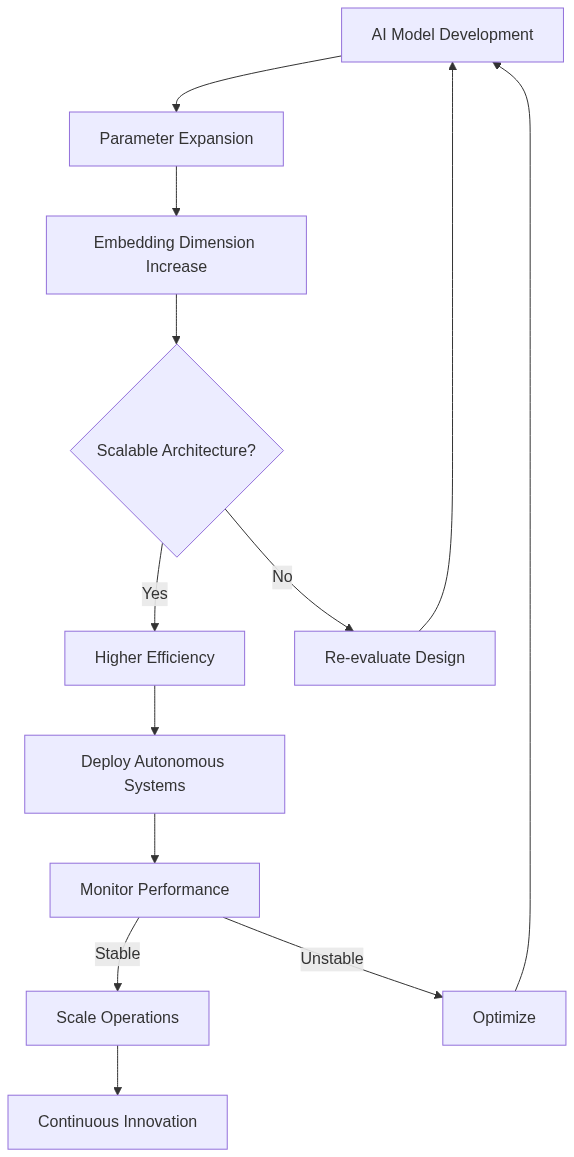
GLM-5 stands at the forefront of AI development, boasting a dramatic increase in its parameter count to 744 billion, a substantial leap from its predecessor, GLM-4.7. This positions it between major models like DeepSeek-V3.2 and Kimi K2, illustrating its powerful capabilities.
- Parameter Growth: From 355 billion to 744 billion
- Active Parameters per Token: Increased from 32 billion to 40 billion
- Expert Expansion: Number of experts grew from 160 to 256
GLM-5's advancements align it with flagship offerings such as GPT-5.2 extra-high and Gemini Pro 3 — Sebastian Raschka, LinkedIn
The Rise of Agentic AI: A Paradigm Shift
The concept of agentic AI is gaining momentum, driven by the need for autonomous systems that can operate with minimal human intervention. This trend is highlighted by MIT Sloan, which underscores the strategic importance of agentic AI in contemporary applications.
- Agentic AI enables systems to perform tasks independently
- Reducing reliance on human operators increases efficiency
- Aligns with industry trends towards autonomy
The failure rate of AI projects not adapting to agentic architecture is reportedly 95% — AvidClan Blog

Practical Implications for Enterprises
For businesses, the shift to agentic engineering offers numerous advantages, including operational efficiency and enhanced scalability. However, the transition requires careful planning and execution, especially in managing AI as a workforce.
- Efficiency Gains: Automating repetitive tasks
- Scalability: Managing large-scale operations with AI agents
- Reliability: Building systems that adapt and learn autonomously
Organizations managing agents as workers are finding success in agentic AI implementations — Deloitte
Challenges and Considerations in Adopting Agentic AI
While agentic AI offers significant potential, it also presents challenges. One critical aspect is ensuring that benchmark performance translates into real-world effectiveness, as noted by experts.
- Ensuring real-world applicability of AI models
- Overcoming potential pitfalls in deployment
- Adopting comprehensive management strategies
Benchmark performance does not necessarily equate to real-world effectiveness — Sebastian Raschka, LinkedIn
How Jina Code Systems Can Facilitate the Transition
At Jina Code Systems, we specialize in engineering AI solutions that are future-proof. Our expertise in building AI agents and automation platforms positions us as an ideal partner for enterprises looking to embrace agentic engineering.
- Designing intelligent digital systems
- Scaling AI applications across industries
- Enabling continuous innovation through cloud-native solutions
Conclusion
The future of AI lies in agentic engineering, where systems are designed to operate with autonomy and intelligence. As enterprises navigate this transformative landscape, partnering with experts like Jina Code Systems can ensure a seamless transition to these advanced technologies, driving innovation and operational excellence.