The year 2025 marked a significant leap in the field of artificial intelligence. The pace of innovation was relentless, with breakthroughs emerging from both research labs and open-source communities. For tech leaders and developers, understanding these advancements is crucial for leveraging AI to drive business value. In this post, we'll explore the most impactful AI developments of 2025 and what they mean for enterprises.

Revolutionary Advancements in Reasoning Models
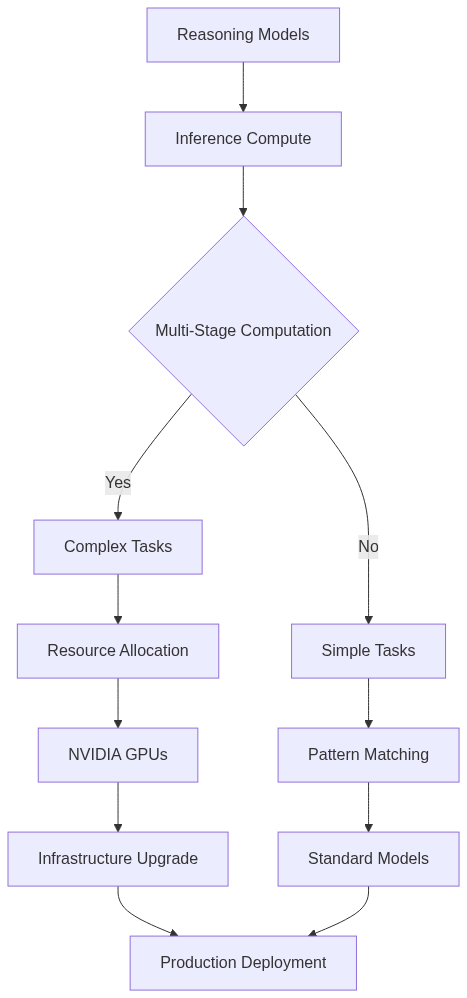
Reasoning models in 2025 signaled a fundamental shift from traditional language models. These models now allocate significant compute resources during inference, allowing them to 'think' through problems rather than just predicting the next token. This capability is akin to solving complex mathematical equations by working through each step meticulously, rather than relying on memorized answers.
By 2025, reasoning models had become critical as they moved from research to production, unlocking new capabilities in AI systems. — Islam, 2025
For enterprises, this means adopting infrastructure that can handle these demanding workloads. High-memory bandwidth and flexible resource allocation are now necessary to support reasoning models effectively.
Expanding Context Windows and Memory Management
In 2025, the expansion of context windows in language models was a game-changer, allowing models to process hundreds of thousands of tokens simultaneously. This advancement reduces the complexity of information retrieval by enabling models to load entire documents or codebases in a single request.
However, this capability comes with increased memory demands. High-memory GPUs have become a baseline requirement, as these models require substantial memory for storing processed tokens.
According to Gartner, the need for high-memory GPUs is now standard, driving increased infrastructure demands for enterprises.

The Rise of Multimodal Capabilities
Multimodal models that integrate text, images, and video reached production readiness in 2025. These models can handle complex tasks such as document analysis and UI debugging by synthesizing visual and textual information.
For enterprises, this opens new avenues for applications in fields like healthcare and customer support, where visual data is critical. However, the challenge lies in managing the substantial memory overhead required by vision encoders.
McKinsey reports that AI is driving real value across sectors, with multimodal models playing a key role in this transformation.
Open-Source Models and the Shift in Deployment Economics
In 2025, open-source models reached quality parity with proprietary models, narrowing the performance gap to just 1.7% on key benchmarks. This shift has democratized AI, allowing enterprises to leverage high-quality models without being tied to proprietary solutions.
For businesses, this means greater control and compliance, particularly in regulated industries where data residency is critical. The transition from renting APIs to owning deployment environments requires upfront investment but offers long-term cost benefits.
A McKinsey study found that almost all companies are investing in AI, yet only a small fraction feel they have fully matured their capabilities, highlighting the importance of operational maturity.
Agentic AI: Beyond Chatbots to Workflow Automation
Agentic AI workflows emerged as a significant trend in 2025, with companies seeking AI solutions that could handle complete workflows autonomously. These AI agents can research issues, synthesize information, and execute multi-step tasks, providing tangible business value beyond traditional chatbots.
However, many organizations still struggle to deploy these systems productively, often defaulting to human-in-the-loop architectures. Developing the operational capability to manage specialized agents effectively remains a key challenge.
The World Economic Forum notes that AI has been a dominant force in 2025, driving unprecedented change across various sectors.
Conclusion
The advancements in AI throughout 2025 have reshaped the enterprise landscape, offering new possibilities for innovation and efficiency. However, the journey from capability to production requires strategic infrastructure investments and operational maturity. At Jina Code Systems, we specialize in designing and deploying intelligent digital systems that leverage these cutting-edge AI capabilities. As we look to 2026, partnering with experts in AI deployment will be crucial for enterprises aiming to stay competitive in this rapidly evolving field.