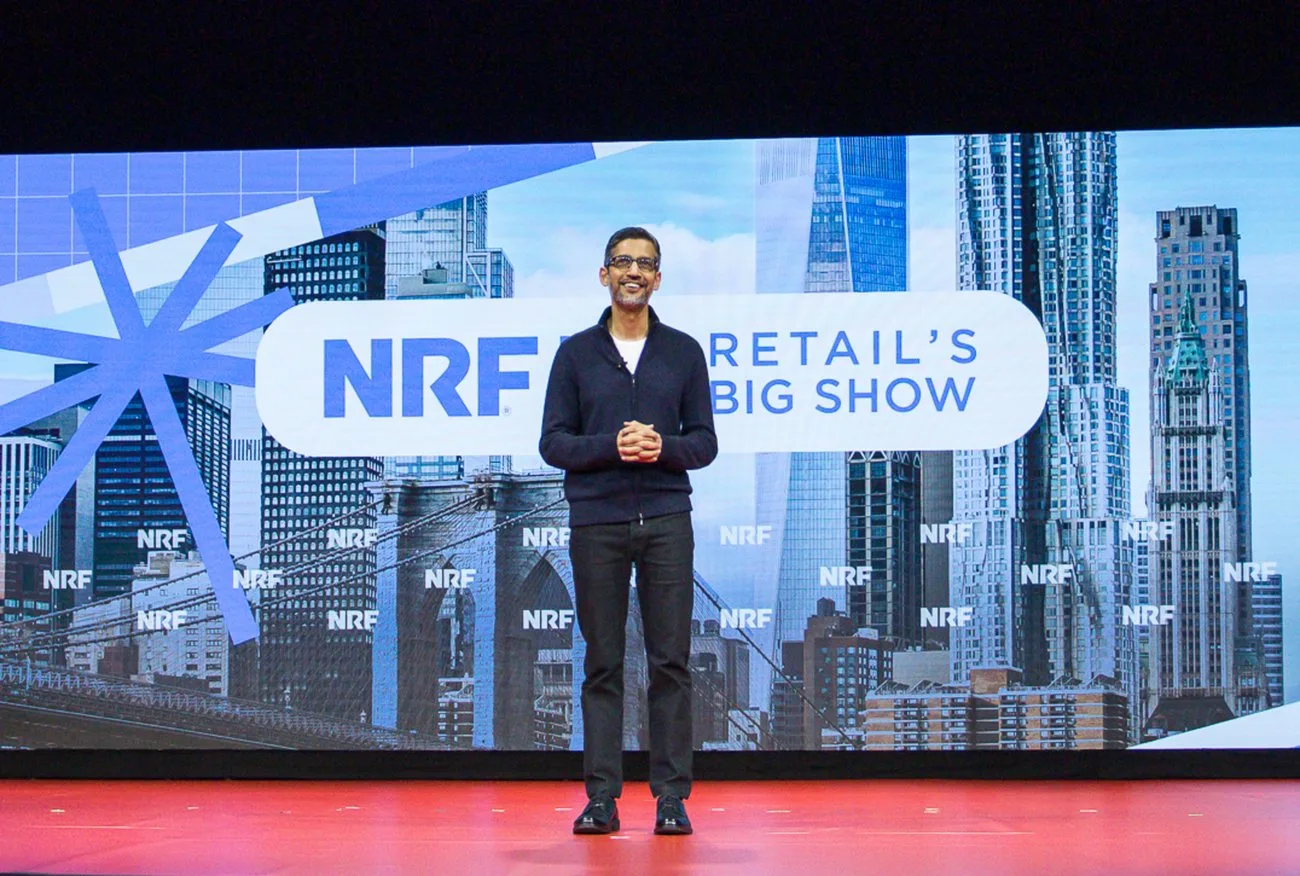
The retail industry stands at the brink of a transformation that promises to redefine customer experiences and business operations. With AI-driven innovations leading the charge, companies are poised to embrace a new era of agentic commerce, characterized by streamlined interactions and personalized shopping journeys. As Sundar Pichai highlighted at the 2026 National Retail Federation, the future of retail is about expanding opportunities for all stakeholders, creating seamless experiences that go beyond mere transactions.
The Dawn of Agentic Commerce
Agentic commerce represents a significant paradigm shift in the retail industry, moving from traditional, transactional models to more dynamic, AI-enabled interactions. This shift is driven by the rise of AI agents that facilitate more personalized and efficient shopping experiences. According to Gartner, by 2028, 60% of brands are expected to leverage agentic AI to enhance one-to-one customer interactions.
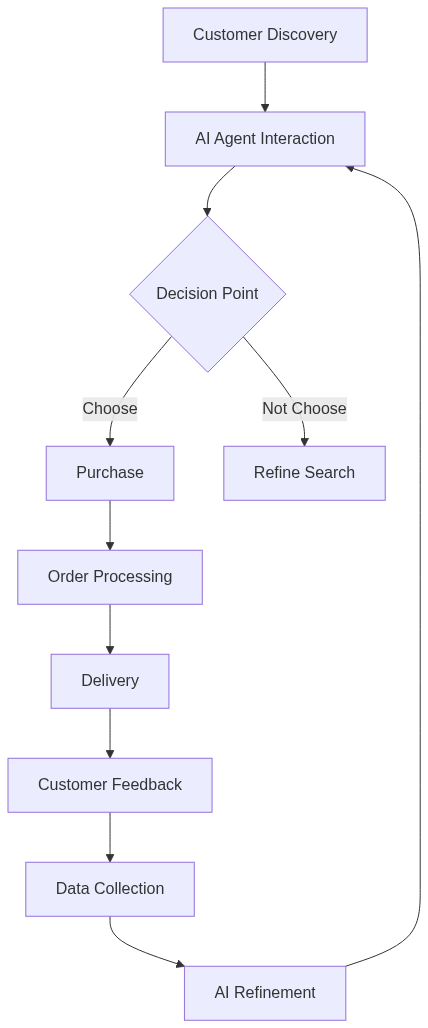
AI agents serve as digital intermediaries that can guide consumers through their shopping journey, from product discovery to purchase decisions. This approach not only enhances the customer experience but also enables retailers to build lasting relationships with their clientele.
Industry experts warn that as retailers increasingly adopt AI platforms, they risk losing valuable data and direct consumer interactions. This disruption is expected to continue evolving — Retail Dive
AI's Role in Product Discovery and Decision-Making
Google's AI advancements, including the Shopping Graph and AI Mode, are revolutionizing how consumers discover and decide on products. The Shopping Graph, with its 50 billion product listings, provides real-time information on inventory, prices, and reviews, allowing for informed decision-making at the speed of retail. More than 2 billion of these listings are refreshed every hour, demonstrating a commitment to dynamic, up-to-date consumer information.
The integration of AI into these platforms means moving beyond keyword searches to natural, conversational interactions. This transition marks a fundamental shift in consumer behavior, where AI takes on the laborious task of filtering and personalizing search results to match individual preferences.
Introducing the Universal Commerce Protocol
To support the seamless operation of this agentic ecosystem, Google has introduced the Universal Commerce Protocol (UCP). UCP is a critical infrastructure designed to facilitate communication between diverse AI systems and services, ensuring a cohesive customer journey from discovery to decision. Developed in collaboration with industry giants like Shopify, Etsy, and Walmart, UCP promises interoperability across existing protocols such as Agent2Agent and the Agent Payments Protocol.
This open and agnostic protocol is built to function at a global scale, addressing the complexities of modern commerce journeys and enabling retailers to maintain control over their customer relationships.
- Open and agnostic: Built with industry leaders
- Interoperability: Compatible with existing protocols
- Global scale: Designed for worldwide commerce

The Challenges and Opportunities of AI in Retail
While the potential of AI in retail is immense, there are challenges that need to be addressed for successful implementation. Issues such as data control, process management, and human oversight pose significant risks. As highlighted by Kognitos, the lack of a structured approach to AI deployment can hinder enterprise adoption.
However, the opportunities far outweigh these challenges. The rise of AI-powered shopping agents is a testament to the retail sector's broader digital transformation, as noted by the World Economic Forum. Retailers that effectively integrate AI into their operations stand to gain a competitive edge through enhanced customer interactions and streamlined operations.
The adoption of AI platforms poses risks, including potential loss of market share and data control, as retailers may become overly reliant on external platforms — Retail Dive
Case Study: The Impact of AI on Retail Growth
An illustration of AI's impact on retail can be seen through Google's internal data, which shows a significant increase in AI usage among retail customers. By the end of Q4 2025, 90T+ monthly tokens were processed on Google Cloud Vertex AI, marking an 11x year-over-year growth. This data underscores the growing reliance on AI technologies to drive efficiencies and innovation in the retail sector.
As retailers continue to embrace AI, they are positioned to not only enhance customer experiences but also optimize their supply chains and operational processes.
Conclusion
The retail industry is on the cusp of a transformative journey, with AI and agentic commerce at the forefront. As businesses navigate this landscape, partnering with companies like Jina Code Systems, experts in AI and digital solutions, can provide the necessary guidance and technology to thrive in this new era. By embracing these innovations, retailers can ensure they remain at the cutting edge of consumer engagement and operational excellence.