In the rapidly evolving landscape of scientific research, AI technologies like OpenAI's Prism are set to revolutionize how scientists write, collaborate, and innovate. Powered by the advanced GPT-5.2 model, Prism offers a seamless integration of AI into the scientific workflow, promising to accelerate the pace of discovery and innovation. But what does this mean for the future of research, and how can enterprises leverage these advancements?
The Era of AI-Driven Scientific Workflows
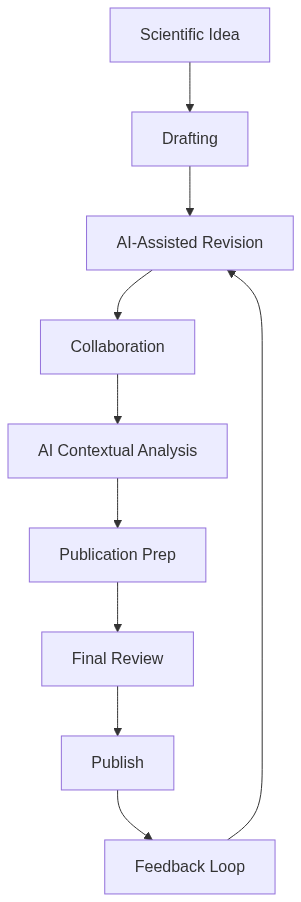
AI is increasingly becoming integral to scientific processes, offering capabilities that were once unimaginable. According to the MIT FutureTech Workshop, AI is rapidly transforming the scientific landscape, embedding itself into various aspects of research and development. This transformation is evident in the way AI technologies like Prism are being adopted to streamline and enhance scientific workflows.
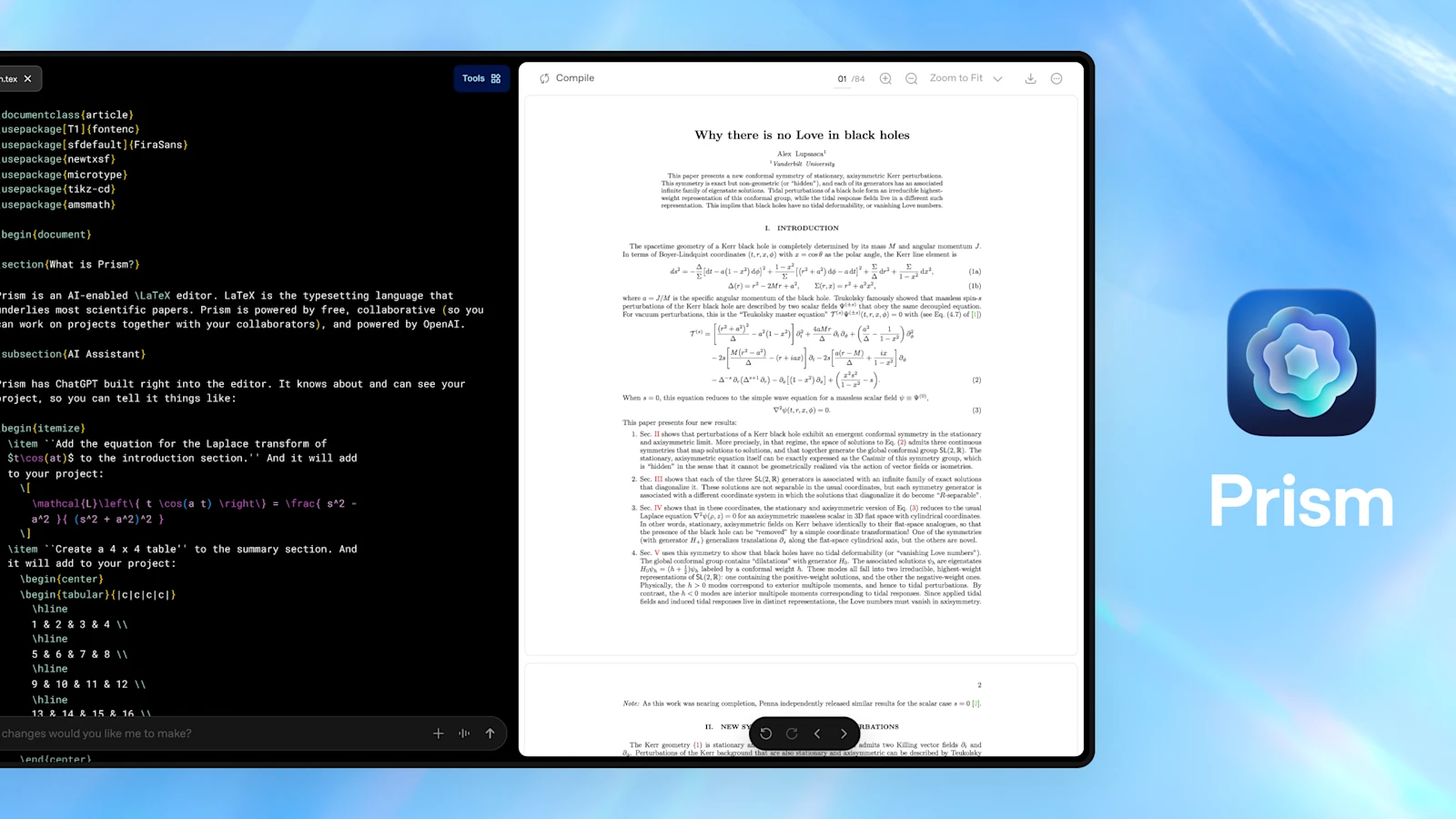
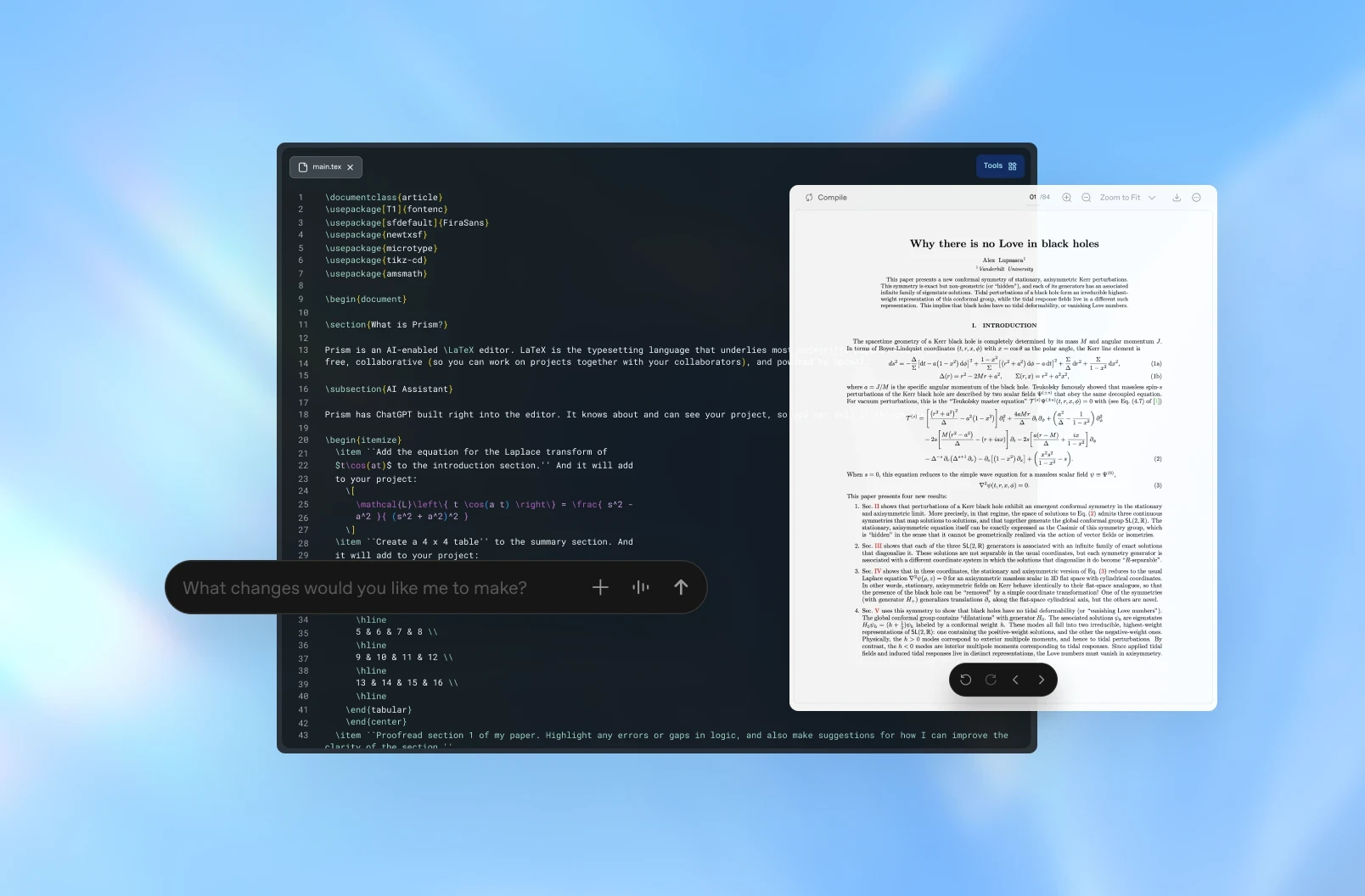
Prism is designed to address the fragmentation in scientific research, where tasks like drafting, revising, and collaborating are often scattered across disconnected tools. By providing a unified, AI-enhanced platform, Prism not only consolidates these tasks but also enhances them with the capabilities of GPT-5.2, allowing researchers to focus on the substance of their work rather than the mechanics of process management.
Breaking Down Barriers to Collaboration
Scientific research is inherently collaborative. Traditionally, this collaboration has been hampered by logistical challenges and tool fragmentation. Prism aims to eliminate these barriers by offering a cloud-based workspace that supports unlimited collaborators. This feature is crucial for research teams that span different institutions and geographies, eliminating the need for local installations and environment management.
According to the JMIR report, embedding scientific evaluation throughout the AI lifecycle is essential for improving adoption and scalability in digital health, a principle that Prism embodies by integrating AI directly into the scientific workflow.
By reducing version conflicts and manual merging, Prism allows teams to engage more deeply with their research, spending less time on file management and more on innovation.
Expanding Access and Democratizing Science
Prism is not just about improving efficiency; it's also about expanding access to scientific tools. By offering a free-to-use platform, Prism democratizes access to high-quality scientific resources, enabling more researchers to participate fully in the scientific process. This is particularly significant as AI becomes a fixture in daily operations, with expectations for widespread AI integration by 2034, according to IBM.
Importantly, Prism's AI capabilities are designed to enhance rather than replace human roles, providing a platform where human-AI collaboration can thrive. This aligns with findings from SmythOS, which highlights successful human-AI collaboration as a key driver in achieving innovation without displacing human expertise.
Real-World Implications for Enterprises
For enterprises, the implications of AI-driven platforms like Prism are profound. By integrating AI into scientific workflows, companies can accelerate their R&D processes, reduce time to market for new products, and foster innovation. This is particularly relevant in industries like pharmaceuticals and biotechnology, where the pace of discovery can significantly impact competitiveness and market share.
- Faster Iteration: AI accelerates the experimental iteration process, particularly in fields like molecular biology.
- Enhanced Collaboration: Real-time collaboration tools reduce the overhead of managing multiple versions and tools.
- Cost Efficiency: Cloud-based solutions eliminate the need for costly local installations and maintenance.
The Future of Scientific Innovation
As AI continues to evolve, its role in scientific innovation will only grow. The introduction of platforms like Prism marks an early but significant step towards a future where AI not only supports but actively enhances the scientific process. By enabling researchers to focus on high-level insights rather than low-level logistics, AI-driven tools can accelerate the pace of discovery and innovation.
At Jina Code Systems, we understand the transformative potential of AI and are committed to helping enterprises leverage these technologies to build smarter, more efficient systems. By adopting platforms like Prism, organizations can not only stay ahead of the curve but also redefine what's possible in scientific research.
Conclusion
Prism represents a significant leap forward in the integration of AI into scientific research. By addressing existing workflow challenges and expanding access to powerful tools, Prism is poised to accelerate the pace of scientific discovery. For organizations looking to innovate continuously, partnering with experts like Jina Code Systems can provide the expertise needed to harness these advancements effectively.