The line between developer and autonomous agent is rapidly blurring. With cloud-based agents now able to control their own full-featured development environments—from writing code to testing, debugging, and even shipping features—the software engineering landscape is entering a new era. This isn't just about automating rote tasks. It's about giving agents end-to-end autonomy and redefining what it means to build and maintain digital products. At Jina Code Systems, we've seen firsthand how this shift is upending workflows and unlocking a new tier of productivity and quality. What happens when agents can finally use the software they build? The answer: software teams can move faster, focus on higher-order decisions, and scale innovation like never before.
Why Agents Hit a Wall Without Real Computer Control
Traditional AI coding assistants—think autocomplete tools or basic code generators—are limited by the boundaries of their environment. They can suggest snippets or even draft full files, but they can't truly use or test the software they create. This means every proposed change still needs a human to verify, run, and debug.
According to Gartner's 2025 AI in Software Engineering report, over 60% of enterprises cite "lack of agent autonomy" as the primary barrier to scaling AI-driven development. When agents are forced to operate locally—on a developer's machine—they quickly run into resource conflicts, security constraints, and workflow bottlenecks.
- Resource contention: Local agents compete for CPU, memory, and network bandwidth, slowing everyone down.
- Security and isolation: Running untrusted code on endpoints is a non-starter in regulated industries.
- Manual validation overhead: Humans must still check each PR, test locally, and resolve conflicts.
This ceiling has kept agentic workflows limited to helper roles—until now.
Cloud Sandboxes: The Breakthrough for Agent Autonomy
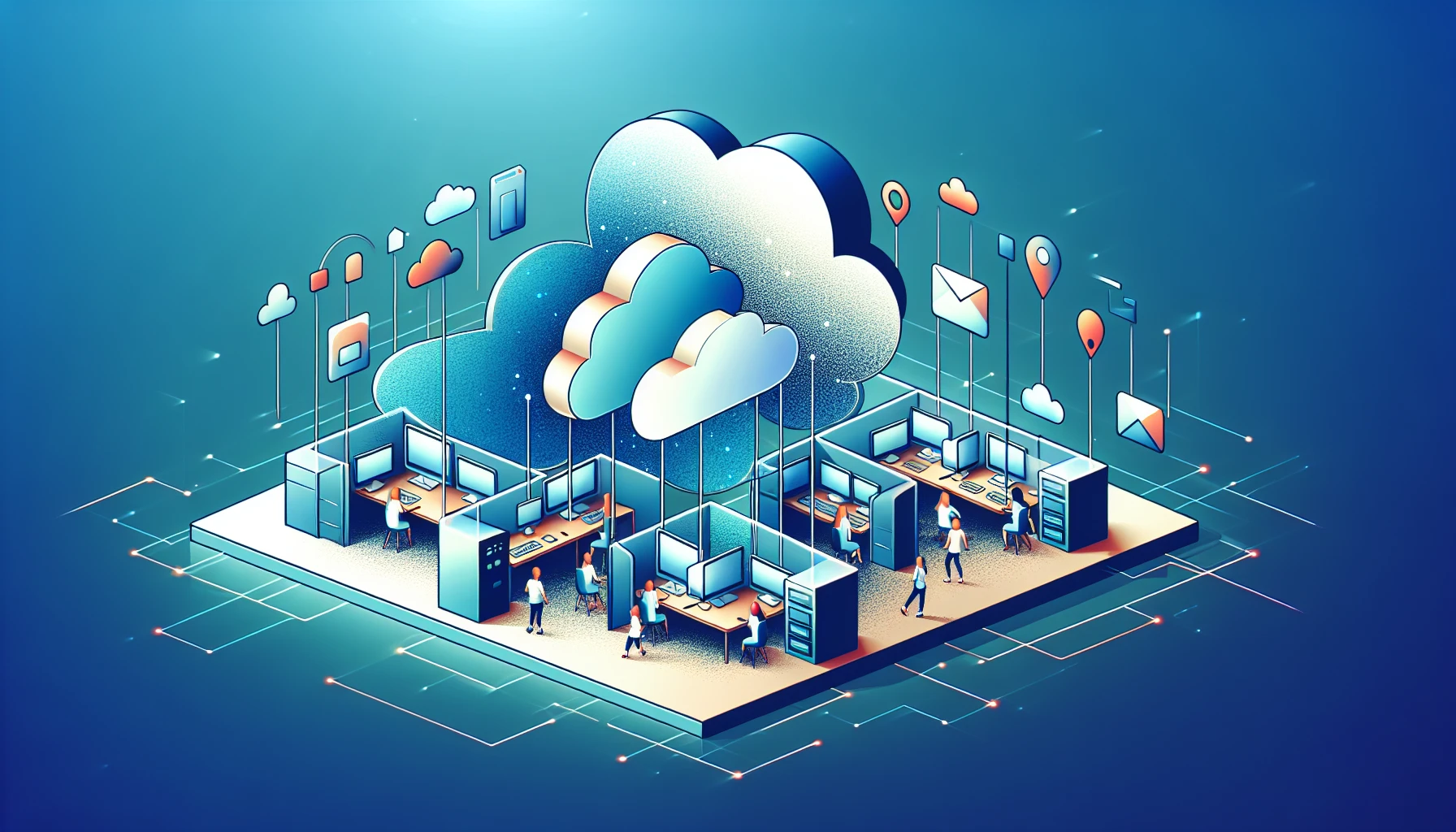
To unlock true autonomy, leading teams like Cursor and Jina Code Systems have shifted to cloud-based sandboxes for agents. Instead of running on your laptop, each agent gets its own isolated virtual machine (VM)—complete with a full development stack, build tools, and access to the codebase.
This architecture delivers three crucial advances:
- Parallelism at scale: Multiple agents can work independently, without stepping on each other's toes.
- Continuous validation: Agents can build, test, and interact with the running application repeatedly—producing videos, screenshots, logs, and other artifacts for human review.
- Human-in-the-loop control: Developers can take over an agent's remote desktop, make manual edits, or steer the process mid-flight, all from the web or even Slack.
The result is a workflow where agents no longer just propose changes—they implement, verify, and demo them, producing merge-ready PRs complete with all evidence needed for rapid validation.

Redefining Developer Roles: From Micro-Management to Mission Control
This leap in agent capability fundamentally changes the role of the developer. Instead of breaking down work into micro-tasks and stitching together results, developers now delegate ambitious objectives—and let agents run with them.
Consider how Cursor's teams now operate:
- Feature implementation: Agents build new plugins, index source files, construct GitHub links, and even rebase branches and resolve merge conflicts autonomously.
- Security triage: Agents reproduce vulnerabilities, build exploit demos, and document the attack flow with videos and screenshots.
- UI testing: Agents perform exhaustive walkthroughs of documentation sites, verifying navigation, search, and theming across browsers and platforms.
According to a 2024 McKinsey study, "fully autonomous code agents" are expected to reduce manual quality assurance cycles by up to 40% and increase feature throughput by 25% in agile organizations.
More than 30% of PRs in production at Cursor are now created by cloud agents operating autonomously in isolated sandboxes. — Cursor, 2026
The developer's focus shifts from task execution to setting direction, reviewing results, and deciding what ships. This is the future of "developer as mission control."
Scaling Up: Real-World Impact and Industry Adoption
The proof is in the numbers. Early adopters of cloud agent architectures report significant improvements in both speed and quality. For example, Cursor found that agents could resolve UI bugs, implement dynamic features, and reproduce vulnerabilities—all without human intervention beyond the initial prompt.
Industry-wide, the shift to cloud-based agents is accelerating. According to Forrester's 2024 State of Enterprise AI, 47% of organizations deploying AI for software development now run agent workloads in isolated cloud environments, up from 23% in 2022. This move is driven by:
- Security: Isolated VMs reduce the risk of data leakage and supply chain attacks.
- Auditability: Artifacts—like video walkthroughs and detailed logs—provide a transparent record of agent activity.
- Continuous learning: Agents can learn from past runs, optimizing their approaches and reducing repeat errors over time.
At Jina Code Systems, we've helped enterprises transition to agent-driven CI/CD pipelines, where autonomous agents not only generate code but also manage merges, run integration tests, and monitor deployments in production. This isn't a theoretical future—it's happening now.
From Agents That Suggest to Agents That Ship
What does the next phase look like when agents are responsible for the entire software lifecycle? The vision: self-driving codebases where agents not only create pull requests but also manage rollouts, monitor telemetry, and respond to production issues in real-time.
To fully achieve this, the industry must address challenges in:
- Coordination: Orchestrating work across swarms of agents to avoid duplication and ensure consistency.
- Model evolution: Training agents to learn from historical runs, adapt to organizational standards, and continually improve their effectiveness.
- Tooling: Building robust interfaces for artifact review, agent oversight, and exception handling.
As outlined in Cursor's research, the goal is to move from "agents that propose diffs" to "agents that deliver, validate, and ship tested features end-to-end." It's a radical reimagining of the software pipeline—and one that promises to amplify human creativity rather than replace it.
Conclusion
The rise of cloud-based autonomous agents is not a distant vision—it's a tangible reality reshaping how software is built, tested, and delivered. As agents gain the power to use, test, and ship their own work, developers are freed to focus on what truly matters: strategy, oversight, and innovation. The organizations that embrace this model will set the pace for digital transformation in the years ahead. At Jina Code Systems, we're helping enterprises architect, deploy, and scale these next-generation agentic platforms—turning the promise of autonomous software into everyday impact. Explore our blog to learn how your team can get started.