Real-time video understanding has long been the holy grail for enterprises seeking to unlock new value from visual data. Yet, the technical and resource barriers have often put true video intelligence out of reach—until now. With Meta’s release of Segment Anything Model 3.1 (SAM 3.1), the landscape is shifting rapidly, delivering AI-powered video detection and tracking at unprecedented speed and scale. For developers and technology leaders, these advancements are more than just incremental—they signal a strategic inflection point for automation, edge deployments, and intelligent media applications. Let’s unpack what SAM 3.1 represents, why it matters for enterprise AI, and where this technology is headed next.
From Bottleneck to Breakthrough: The Multiplexing Revolution
The core challenge in video AI has always been balancing accuracy, speed, and resource constraints. Traditionally, segmenting and tracking multiple objects in video required separate processing passes for each target, leading to exponential slowdowns and hefty GPU bills. Enter SAM 3.1’s object multiplexing: a technical leap that allows up to 16 objects to be tracked in a single forward pass. This change is not just theoretical—it’s delivering a 2x increase in video throughput, boosting performance from 16 to 32 frames per second on a single H100 GPU (Meta, 2024).
- Eliminates redundant computation and memory overhead
- Enables real-time tracking even in crowded, complex scenes
- Makes high-performance vision AI feasible on smaller, more accessible hardware
This isn’t just a technical curiosity—it’s an industry milestone. According to Gartner (2024), computer vision and AI video analytics are among the top strategic tech trends for enterprises, and breakthroughs like SAM 3.1 are why.
Promptable Segmentation: Breaking Out of the Label Prison
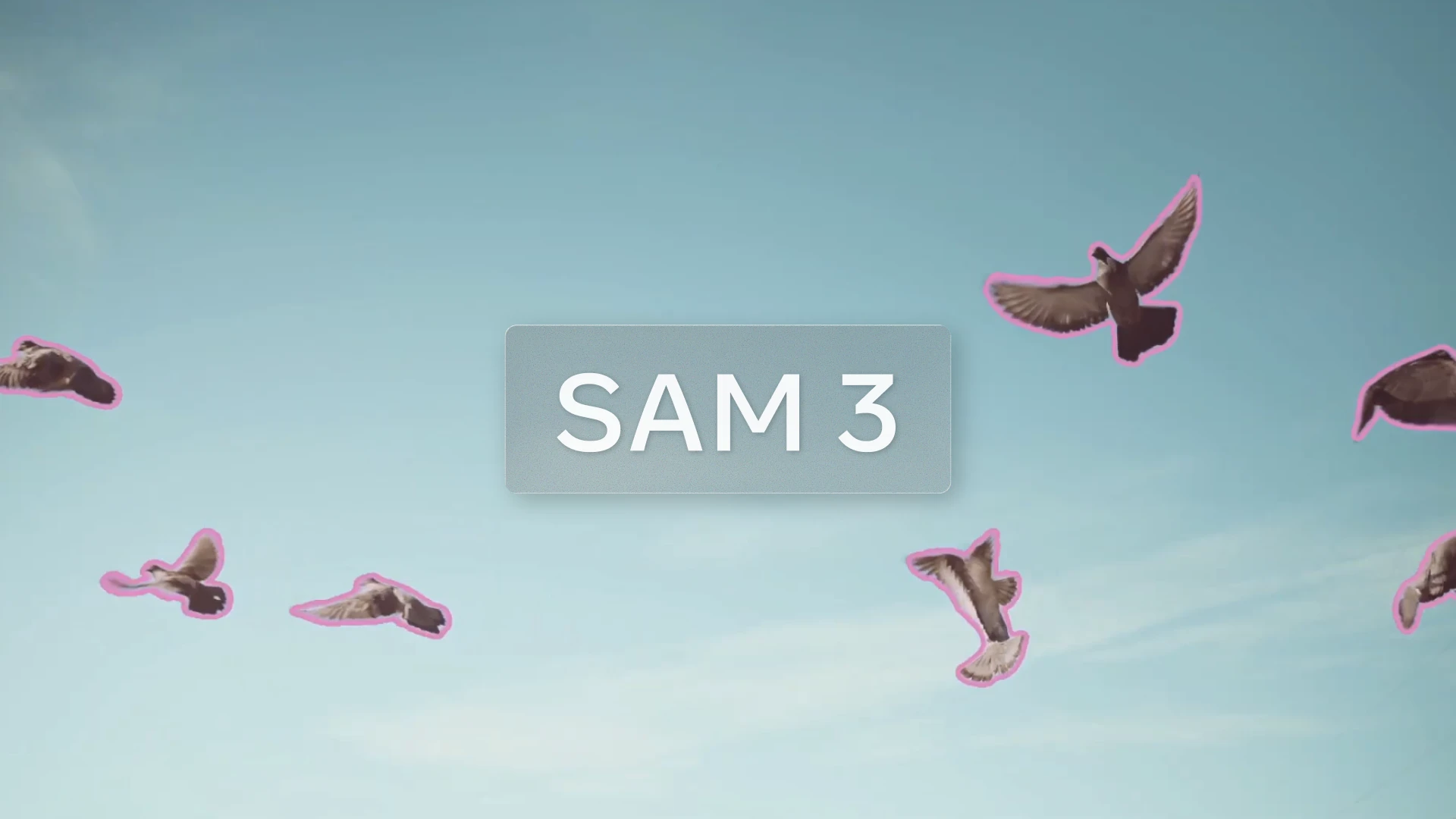
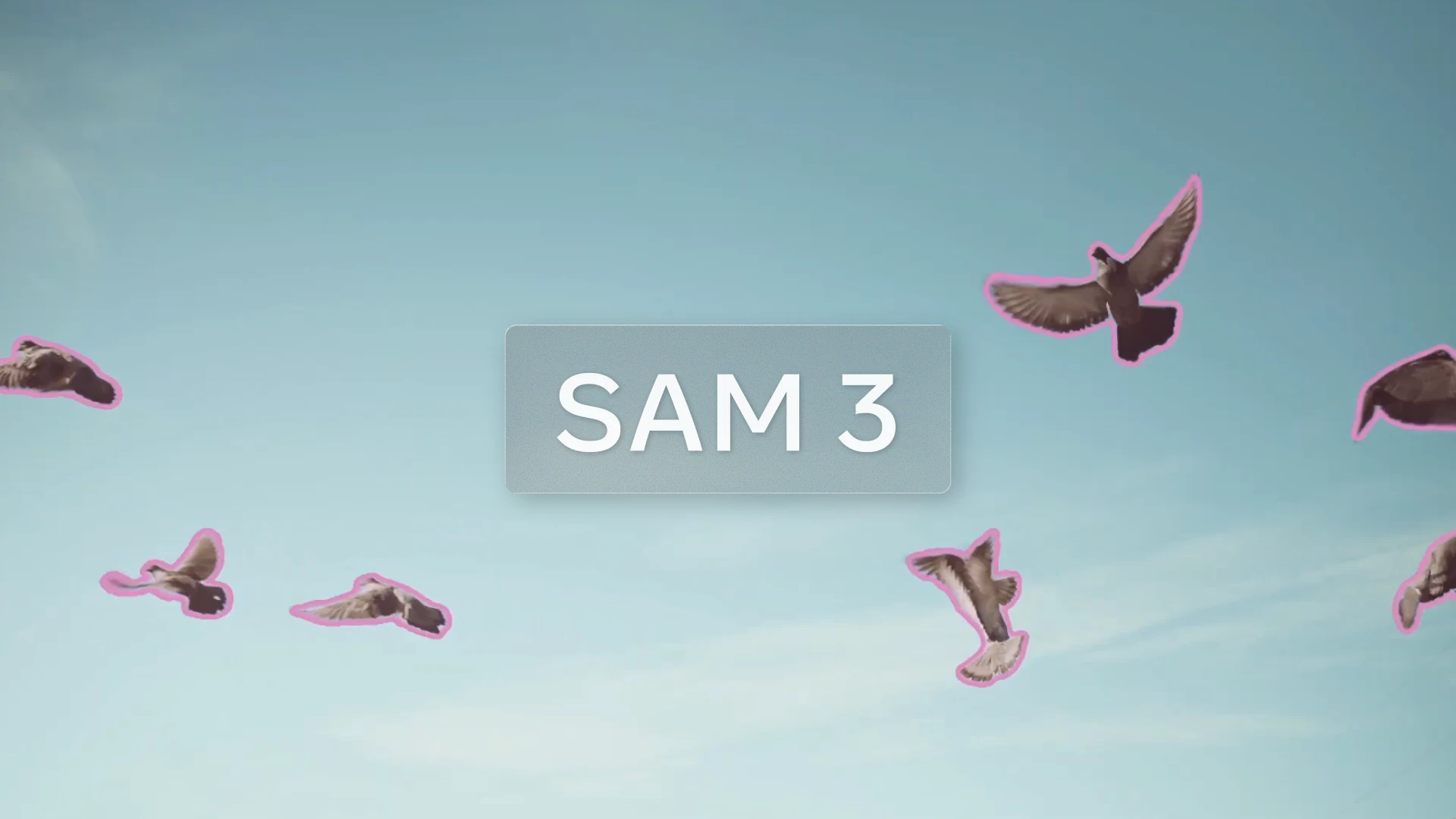
For years, computer vision models were shackled by their own limitations: fixed label sets, inflexible architectures, and the inability to adapt to the open-ended, natural queries humans actually use. SAM 3.1’s promptable concept segmentation shatters these boundaries. Now, users can define objects with text prompts, image exemplars, or visual cues, empowering AI to detect and segment anything from "the striped red umbrella" to "people sitting down but not holding a gift box." This leap was validated on the new SA-Co benchmark, where SAM 3 achieved a 2x gain over previous systems—demonstrating real progress in open-vocabulary understanding.
The implications are profound:
- Interactive workflows: Editors and creators can target nuanced objects or people with a single click, as seen in Meta’s Edits and Vibes apps.
- Multimodal AI agents: When paired with large language models, SAM 3.1 can reason about complex queries and segment objects with free-form language.
- Automation at scale: Enterprises can now automate object tracking and media modification tasks that previously required tedious manual intervention.
Such flexibility is critical as the AI Video Generator market surges—projected to hit $21.6 billion by 2034, with a staggering 46% CAGR (Intel Market Research, 2025).
Scaling Data Engines: AI-Human Collaboration in Annotation
High-quality training data is the fuel for any competitive computer vision system, but collecting and annotating millions of images and videos is notoriously slow and expensive. SAM 3.1 takes a hybrid AI-human approach to annotation, leveraging a pipeline where AI models (like Llama-based captioners) generate candidate segmentations and human annotators verify and refine them. The result? Annotation is now 5x faster for negative prompts and 36% faster for positive prompts in fine-grained domains. Automated AI annotators filter out easy cases, letting skilled human reviewers focus on the truly challenging edge scenarios.
- Over 4 million unique concepts annotated
- Continuous feedback loop—each iteration improves both data quality and model accuracy
- Concept ontology mapping (based on Wikipedia) expands coverage of rare and nuanced concepts
This scalable, semi-automated approach is a blueprint for the future of AI data engineering—an approach Jina Code Systems has championed in its intelligent data pipelines for enterprise clients.
Real-World Impact: From Marketplace AR to Wildlife Conservation
What does this technology look like when it leaves the lab? Consider two compelling cases:
- Facebook Marketplace: SAM 3 and 3D power the "View in Room" feature, allowing shoppers to visualize items like lamps or tables in their own homes before buying. This is not just a gimmick—it's a direct driver of confidence and conversion in e-commerce.
- Wildlife Conservation: In partnership with Conservation X Labs and Osa Conservation, Meta has released the SA-FARI dataset, containing over 10,000 camera trap videos annotated with bounding boxes and masks for every animal. This enables automated monitoring and research at a scale never before possible (CNET, 2024).
SAM 3.1 doubles video processing speed for medium-object videos, increasing throughput from 16 to 32 frames per second on a single H100 GPU. — Meta, 2024
These examples demonstrate how foundational models like SAM 3.1 can unlock new business models and scientific discoveries—without requiring a fleet of specialized hardware or armies of annotators.
Architectural Insights: Unified Vision for Detection, Segmentation, and Tracking
Behind SAM 3.1’s practical achievements lies a sophisticated architecture that fuses multiple AI advances. Its Meta Perception Encoder integrates both text and image signals, while a memory bank and transformer-based detector (building on DETR) enable robust tracking and segmentation—even across crowded, multi-object scenes. Crucially, the model is designed to avoid "catastrophic forgetting" as new tasks and data are introduced, ensuring versatility across detection, tracking, and segmentation—all in one unified system.
For technology teams, this means:
- Drop-in replacement for legacy pipelines, thanks to backward compatibility
- Instant scalability for new tasks (e.g., video redaction, AR overlays, robotics perception)
- The ability to fine-tune with small, domain-specific datasets, unlocking performance in specialized areas like medical imaging or industrial inspection
As Voxel51’s 2026 analysis highlights, the future of video AI is "edge-first" and foundation-model driven. SAM 3.1’s architecture is perfectly aligned with this trend, opening the door to faster, more distributed intelligence at the edge.
What’s Next: Open Innovation and the Path Forward
While SAM 3.1 pushes the envelope, challenges remain—especially in zero-shot generalization for niche concepts and handling extremely complex, context-dependent prompts. However, the open release of model weights, code, and datasets (including the powerful Segment Anything Playground) is fueling rapid experimentation and domain adaptation. Enterprises and research teams can now fine-tune SAM 3.1 for specialized needs, from first-person robotics to scientific imaging and beyond.
At Jina Code Systems, we’re seeing enterprise clients leverage these breakthroughs to:
- Deploy real-time video analytics on affordable, edge-centric hardware
- Build AI agents that automate complex visual workflows
- Accelerate digital transformation with intelligent, adaptable vision systems
The democratization of advanced video AI is no longer a distant goal—it’s a present-day reality, available to any organization ready to build, adapt, and lead.
Conclusion
The release of SAM 3.1 marks a transformative moment for enterprise AI and computer vision—delivering real-time, flexible, and scalable video understanding previously out of reach for most organizations. As the market for AI-powered video solutions accelerates, the opportunity is clear: those who harness these new models will set the pace in automation, innovation, and digital experience. Jina Code Systems stands ready to help enterprises design, build, and scale AI-powered vision solutions that move faster, operate smarter, and unlock new value from every frame.