The world of AI agents is evolving rapidly, but the next leap won’t come from simply deploying more bots. It will come from automatic multi-agent generation—where new AI agents are designed, refined, and diversified not by human engineers, but by algorithms themselves. Enter EvoAgent, a breakthrough architecture leveraging evolutionary algorithms to transform how enterprises build and scale multi-agent systems. In this post, we’ll explore how this paradigm shift is unfolding, what it means for developers and tech leaders, and why it’s becoming essential for those pursuing true digital transformation.
Why Single-Agent AI Hits a Wall in Complex Enterprises
Many organizations have eagerly implemented single-agent AI systems—think chatbots, virtual assistants, or task-specific bots. But as digital workflows become more intricate, the limits of these isolated agents become clear. They often lack specialization, adaptability, and the ability to collaborate effectively in dynamic environments.
According to industry analysis, multi-agent architectures are now outpacing single-agent systems in fields such as finance, healthcare, and logistics. By 2026, IDC projects that 60% of enterprise software will incorporate multi-agent AI to automate complex workflows and decision-making processes (Joget, 2026).
This shift isn’t just about scale—it’s about specialization and resilience. As Alfons Marques of Technova Partners put it, “The next wave of AI agents will be defined by their ability to operate autonomously, collaborate across domains, and specialize in vertical industries” (Technova Partners, 2025).
EvoAgent: A New Blueprint for Multi-Agent System Generation
Traditional approaches to building multi-agent AI systems are labor-intensive and often require meticulous manual design to ensure agents are both diverse and effective. EvoAgent disrupts this paradigm by using evolutionary algorithms—borrowed from biological evolution—to automatically generate, evolve, and select a population of expert agents.
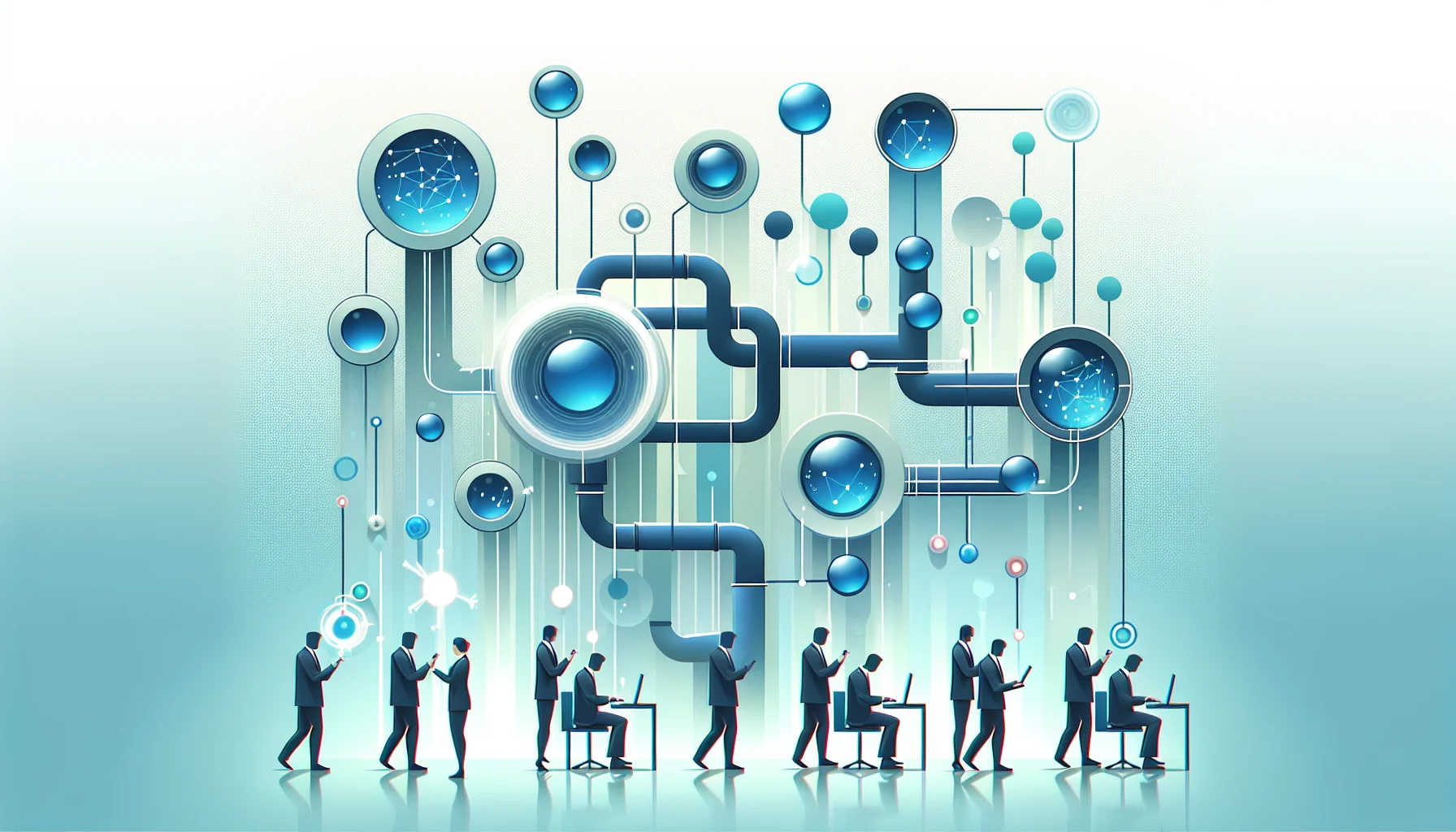
The EvoAgent pipeline unfolds in four stages:
- Initialization: Start with a proven agent framework as the initial population.
- Crossover & Mutation: Apply evolutionary operators to produce new agents with varying characteristics.
- Selection: Use quality checks to retain high-performing traits and introduce beneficial variations.
- Results Update: Integrate outputs from child agents using LLMs to ensure robust solutions.
This process not only reduces manual effort, but also unleashes diversity, enabling the system to automatically specialize and adapt to evolving enterprise needs.
From Debate Teams to Scientific Simulations: Real-World EvoAgent Applications
What does automatic multi-agent generation look like in practice? Consider the following use cases:
- Debate Scenario (MetaGPT): Instead of manually assigning roles to debaters, EvoAgent automatically creates teams of agents with distinct viewpoints, resulting in richer and more varied discussions.
- ScienceWorld Simulations: In a set of 30 scientific tasks, EvoAgent-based multi-agent systems consistently outperformed single-agent setups, tackling open-ended problems in dynamic, unpredictable settings.
- TravelPlanner Benchmark: EvoAgent generated specialist agents (e.g., culinary, transportation, attractions) that collaboratively designed travel plans, better matching user preferences and constraints.
These examples reveal a critical pattern: the more diverse and specialized the agent population, the higher the quality and adaptability of the solutions generated. This echoes enterprise findings—for instance, a global logistics firm saw a 22% increase in resource utilization and a 15% reduction in operational costs after deploying multi-agent optimization (ScienceDirect, 2025).
Multi-Agent Systems in the Enterprise: Performance, Productivity, and Pitfalls
For enterprises, the promise of multi-agent AI is clear: automate more complex workflows, boost specialization, and create resilient systems. In healthcare, multi-agent diagnostic tools have reduced triage times by 35% and improved accuracy by 18% (Terralogic, 2025).
Yet, adopting these architectures isn’t without challenges. Gartner (2025) warns that by 2028, AI agents will outnumber human sellers by 10x, but fewer than 40% of sellers will report improved productivity (Gartner, 2025). This underscores a gap between technical deployment and realized business value. Other concerns include:
- Governance & Security: Multi-agent systems require new policies for transparency, auditability, and compliance (IDC, 2026).
- Coordination Complexity: Orchestrating diverse agents demands robust communication protocols and monitoring frameworks.
- Domain Specialization: Effective multi-agent systems hinge on agents with domain-specific expertise—a challenge EvoAgent’s evolutionary approach is well-suited to address.
The Automation Flywheel: How Evolutionary Agents Drive Continuous Improvement
As organizations move toward autonomous, collaborative, and vertically specialized AI, the ability to automatically generate and evolve agent populations becomes a strategic differentiator. EvoAgent’s approach creates a self-reinforcing flywheel:
- Diverse agent populations tackle a broader set of problems and adapt to new tasks.
- Performance feedback is used to evolve agents, ensuring continuous improvement.
- Collaboration among agents unlocks emergent capabilities, such as cross-domain reasoning and multimodal interaction.
The 2026 IBM AI Trends report highlights this as the new normal, with multi-agent systems moving from experimental to essential for organizations seeking both adaptability and resilience. At Jina Code Systems, we’re seeing firsthand how evolutionary techniques can power next-generation AI agents—creating platforms that learn, adapt, and scale with business needs.
Conclusion
The future of enterprise AI won’t be built on static, single-purpose bots. It will be driven by dynamic, evolving multi-agent systems—the kind EvoAgent and similar frameworks are making possible. As multi-agent architectures reach mainstream adoption, organizations must focus not just on deployment, but on continuous improvement, governance, and real-world performance.
For enterprises ready to harness this new era of automation, the challenge is clear: enable systems that design, test, and improve themselves—at scale. That’s where evolutionary methods and a partner like Jina Code Systems come in. We help organizations design, build, and scale intelligent agentic platforms that don’t just keep up with change—they drive it. Explore more on our blog for insights into the next frontier of AI engineering.